Detect, alert, review, evidence, report.
Five steps between a camera seeing something and an auditor reading about it. None of them is skipped, and each one leaves a mark in the record.
1. Configured detection
GuardianEye does not watch for everything. It watches for the PPE and site-safety rules you have agreed — a hard-hat zone, a high-visibility requirement, an exclusion area — using the context of each camera to know where and when a rule applies. The rules are yours; the cameras are the approved CCTV feeds already on site. Each rule is a module inside one of three agents.
2. An actionable alert
When a configured condition is met, AlertFlow opens a ticket: an ID, a severity (low, medium or high), the location and camera, the module that raised it, the time, and the incident evidence — the frame that met the rule. The supervisor on duty is assigned and sees something they can act on immediately, not a stream to trawl through after the shift.
3. Human review
Nothing is confirmed or closed until a supervisor has looked. The detection proposes; the person decides. If the detection was wrong, the supervisor says so and the record shows a person made that call. That is not a weakness of the system — it is the evidence that oversight is real.
4. The evidence record
The ticket moves from open to in progress to resolved or closed, and every move carries the name of the person who made it. Visual context, status, reviewer and follow-up action are retained together. Behind it sits CloudSeals’ Evidence Fabric, which records source context, purpose, policy and authority context, outcomes, approvals and overrides, downstream actions and final results for every CloudSeals application.
5. Reporting
CompliReport builds the audit report from the tickets and their evidence. An auditor’s questions — what was seen, who looked at it, what was decided, what followed — are answered from the record rather than reconstructed from memory and spreadsheets. Read more on the Evidence page.
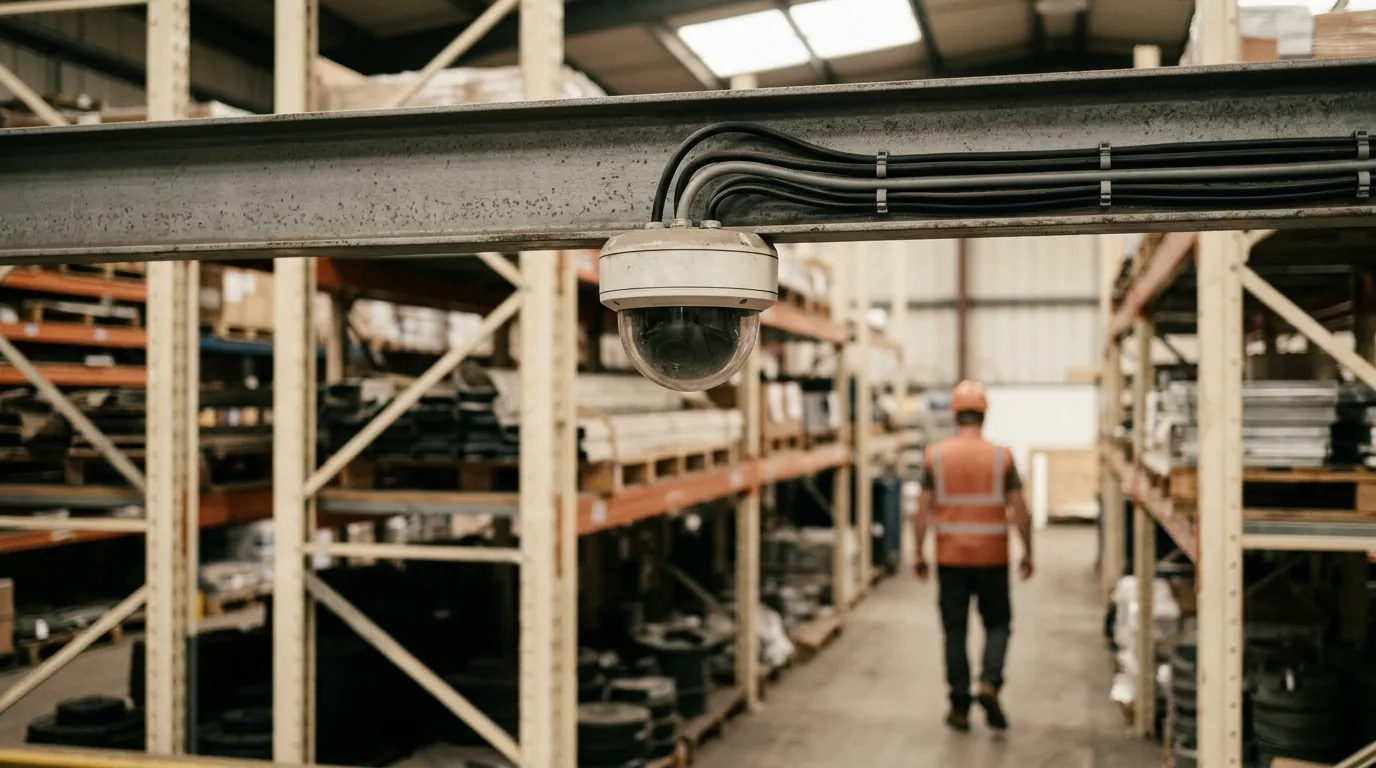
Between the camera and the safety manager.
Cameras
Approved CCTV feeds you already operate. No new hardware to install or certify.
GuardianEye
Configured detection, actionable alerts and the retained record of detection, review and closure.
Your safety team
Supervisors review and close; safety management stays where it is. The record is there when they need it.
Straight answers
Which rules can be configured?
PPE and site-safety conditions agreed with you for each camera and zone — the rules that matter on your floor, with the camera context that tells the system where and when they apply.
How quickly does a supervisor hear about an event?
Alerts are actionable and carry the visual context, so the supervisor can review at once rather than search a recording. Timing in practice depends on your site set-up, which the assessment covers.
Can an alert close itself?
No. Every alert is reviewed and closed by a person, and that review is retained as part of the record.
What if the detection was wrong?
The supervisor closes it as such, and the record shows that a person looked and decided. A wrong detection that a person corrected is exactly the kind of evidence an auditor wants to see.
Does this change how we run safety?
It gives supervision another pair of eyes and a written record. Responsibility for safety stays with the people who hold it.
Start with one site.
A site assessment looks at the cameras you have, the rules that matter on your floor and how the evidence would reach your auditor. Twenty minutes to find out whether it fits.