FSRGuard.
FSRGuard works on the compliance programme rather than the camera: it maps incidents to the clauses of the TAPA Facility Security Requirements, tracks audits, SCARs and waivers, and shows where a site is drifting from its own standard.
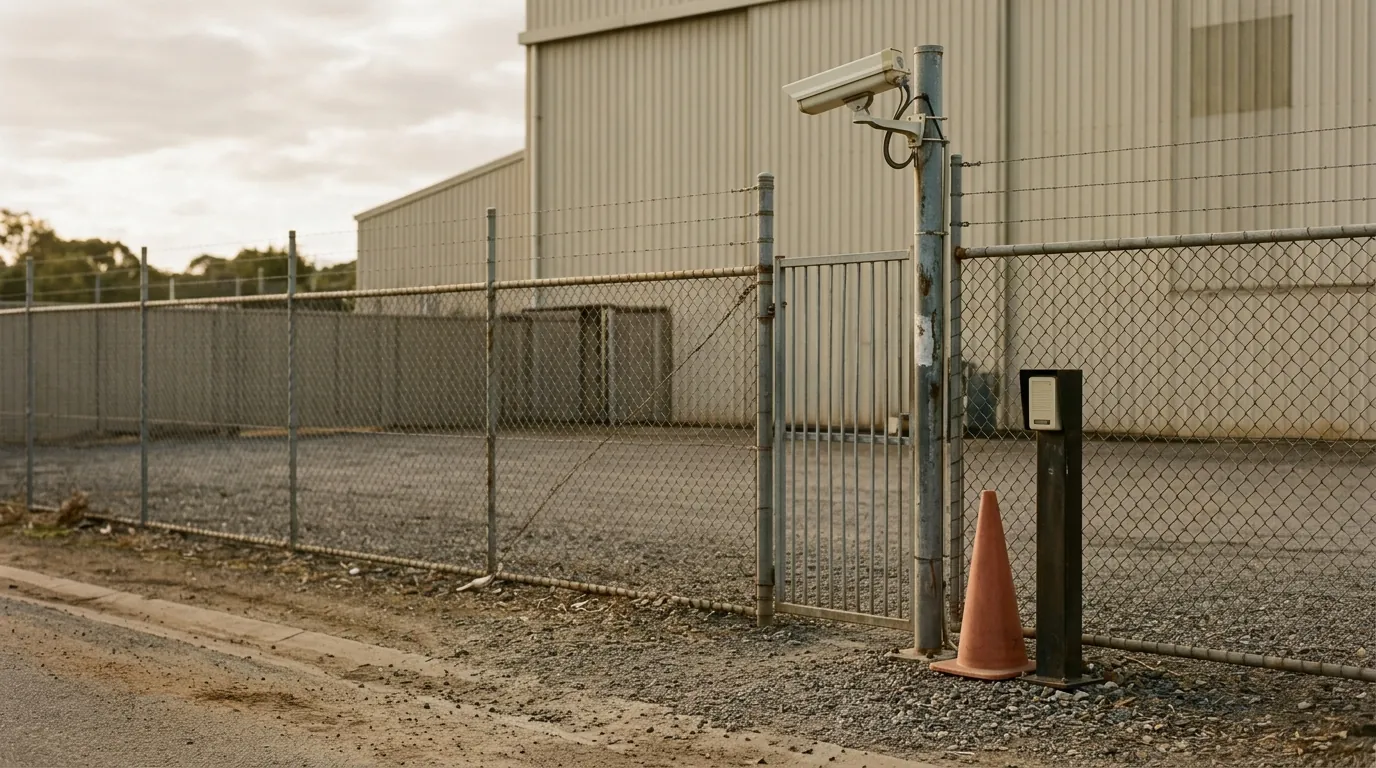
What FSRGuard watches for.
Each module is a configured rule set. Modules with their own page describe the ticket they raise.
Clause Mapping
Maps incidents to TAPA FSR clauses.
Gap & Drift Detection
Identifies compliance gaps and drift over time.
Audit & SCAR Tracking
Tracks audits, SCARs and waivers to closure.
Multi-Site Comparison
Compares compliance across facilities.
Recommendations Engine
Suggests remediation, for a person to accept or reject.
Five categories, mapped from incidents.
FSRGuard reads the site’s tickets and audit findings against the Facility Security Requirements. A ZoneLock ticket becomes an access-control finding; a camera blind spot becomes a CCTV-coverage gap. Findings, SCARs and waivers are tracked to closure and compared across sites.
- Access Control
- Physical access control systems to restrict unauthorised entry.
- CCTV Coverage
- Coverage of critical areas, with recording.
- Perimeter Security
- Fencing and barriers that hold.
- Storage Security
- Additional measures for high-value storage.
- Visitor Management
- Visitors registered, escorted and monitored.
One queue, one review, one record.
AlertFlow
Every module raises the same kind of ticket into the same queue.
Human review
A supervisor is assigned; nothing closes without a name on it.
Evidence
Detection, review and closure kept together for the auditor.
Start with one site.
A site assessment looks at the cameras you have, the rules that matter on your floor and how the evidence would reach your auditor. Twenty minutes to find out whether it fits.